First book of 2020: The Best Exotic Marigold Hotel by Deborah Moggach (reading notes)


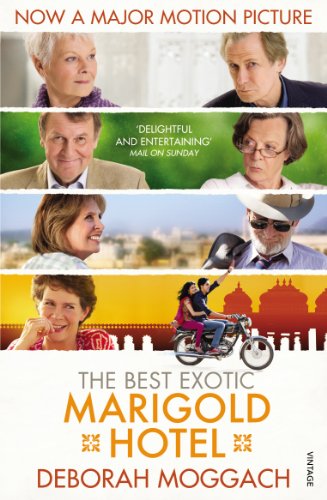
https://images-na.ssl-images-amazon.com/images/I/513rhwqL5uL.jpgI don't know if I've mentioned it before, but I loathe movie tie-in book covers because I feel they are (often) trying to tell me how I should see the characters in the book. The edition of Deborah Moggach's These Foolish Things that I read takes it one step further and changes the title of the book into the title of the film version as well as having photos of the ensemble cast on the cover. Fortunately it has been a long while since I watched the movie, so I couldn't even remember who played whom in the film, and I think it's perfectly understandable to try to cash in on the movie's success by rebranding the book.

Even with a few years between watching the film and reading the book, I could see that the story had been altered, e.g. by having the Marigold Hotel's owner/manager be single and having a romance, instead being of unhappily married to an (understandably, I thought) shrewish wife. It also conflates Sonny, the wheeler dealer behind the retirement home scheme, and Minoo, the hotel's owner, into one character, and drops a few others and their stories. I have no quibbles about this, as I think the movie is actually more streamlined than the book, which is somewhat disjointed at times. There are so many stories being told in the book that one gets a feeling of whiplash from keeping tabs on the characters sometimes as the viewpoints often change quite rapidly.

The author does a good job of tying the different story strands together, but we see so little of each character that it's difficult to find the feeling of empathy for one or more characters I feel is necessary for the full enjoyment of a novel. The one character I was prepared to really like, Dorothy, is only presented as a viewpoint character in the first part of the book, and then pops up as a sort of side-note later in the book and is mainly seen through the eyes of the other focus characters.

I did love reading about India and how it affected the different characters.

I may add more to these reading notes as I think of them.

Comments

Popular posts from this blog

Icelandic folk-tale: The Laughing Merman

Icelanders not only believed in the existence of selkies, but also in mer-people. The mermaids were said to be very beautiful, while the mermen were supposed to be ugly as sin but very wise and able to see things others did not. O nce upon a time a farmer went out fishing and pulled up a merman. He tried to get the merman to talk to him but he would not answer, except to beg him to release him back into the sea, but this the farmer refused to do. The farmer rowed back to land, taking the captive merman with him. When he pulled up the boat on the shore, his wife came to him and greeted him with tenderness and kisses, which he received with pleasure. This made the merman laugh. Then the man’s dog came to him and greeted him tenderly in the way of dogs, by jumping up to him, but the farmer hit the dog. Again the merman laughed. Then the farmer walked up towards his house, but on the way he tripped over a tussock and hurt himself. He got angry and gave the tussock a good kicking. Then...

List love: 10 recommended stories with cross-dressing characters

This trope is almost as old as literature, what with Achilles, Hercules and Athena all cross-dressing in the Greek myths, Thor and Odin disguising themselves as women in the Norse myths, and Arjuna doing the same in the Mahabaratha. In modern times it is most common in romance novels, especially historicals in which a heroine often spends part of the book disguised as a boy, the hero sometimes falling for her while thinking she is a boy. Occasionally a hero will cross-dress, using a female disguise to avoid recognition or to gain access to someplace where he would never be able to go as a man. However, the trope isn’t just found in romances, as may be seen in the list below, in which I recommend stories with a variety of cross-dressing characters. Unfortunately I was only able to dredge up from the depths of my memory two book-length stories I had read in which men cross-dress, so this is mostly a list of women dressed as men. Ghost Riders by Sharyn McCrumb. One of the interwove...

Bibliophile discusses Van Dine’s rules for writing detective stories

Writers have been putting down advice for wannabe writers for centuries, about everything from how to captivate readers to how to build a story and write believable characters to getting published. The mystery genre has had its fair share, and one of the best known advisory essays is mystery writer’s S.S. Van Dine’s 1928 piece “Twenty rules for writing detective stories.” I mentioned in one of my reviews that I might write about these rules. Well, I finally gave myself the time to do it. First comes the rule (condensed), then what I think about it. Here are the Rules as Van Dine wrote them . (Incidentally, check out the rest of this excellent mystery reader’s resource: Gaslight ) The rules are meant to apply to whodunnit amateur detective fiction, but the main ones can be applied to police and P.I. fiction as well. I will discuss them mostly in this context, but will also mention genres where the rules don’t apply and authors who have successfully and unsuccessfully broken the rules. 1...